


Private beta
A feedback loop for everything you read.
learnstack takes articles, papers and books you read, extracts the subject matter concepts, and links them into a graph. It also provides the essential tools for you to remember that material far beyond those initial days, weeks, and months after reading it.
What it looks like
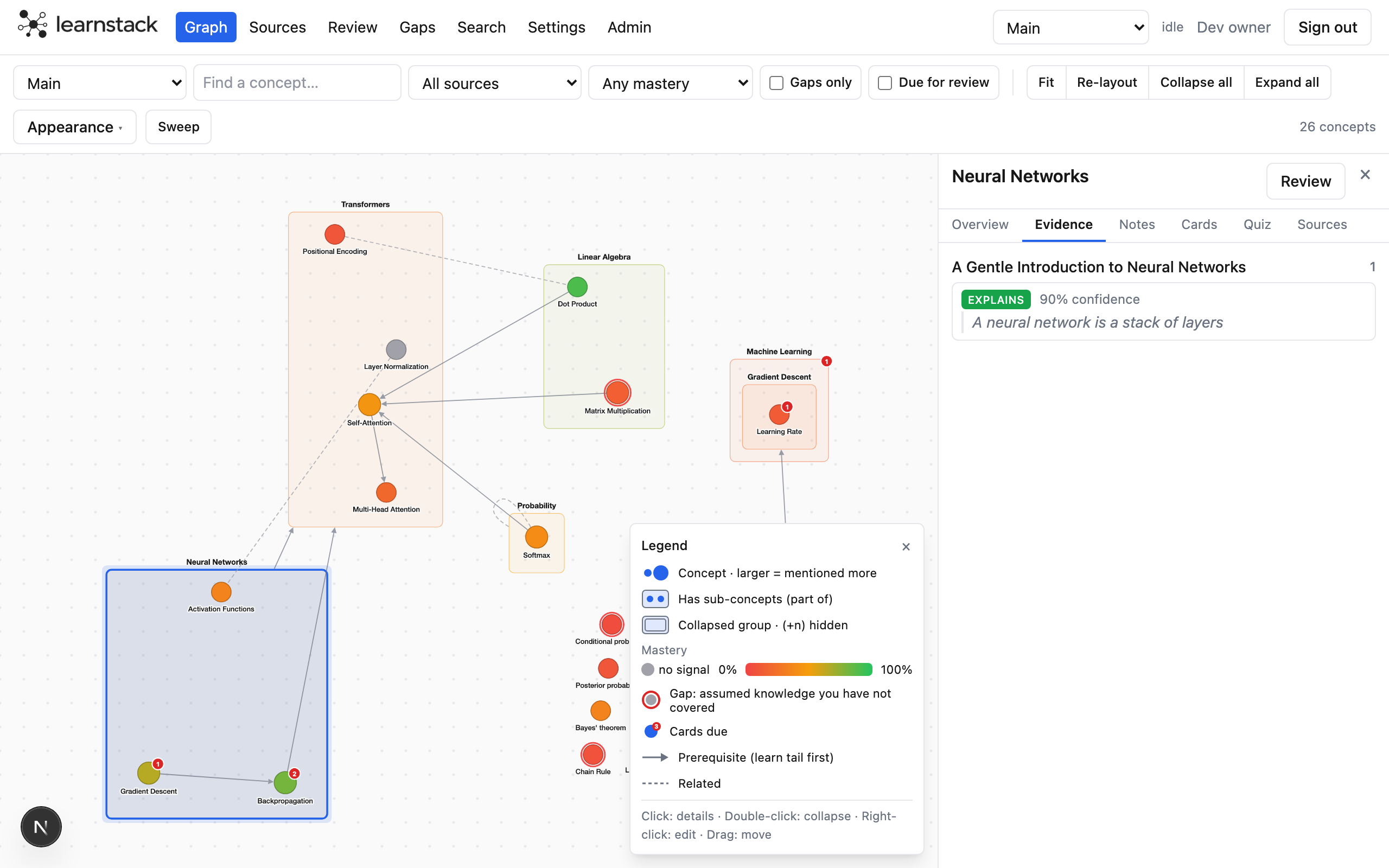
One graph per subject
Every source you add is extracted into concepts and merged into the graph you already have. Nodes group under their parent topic, color shows how well you know each one, and a red outline marks a gap. Click a node and the panel shows the exact sentences from your sources that taught it.
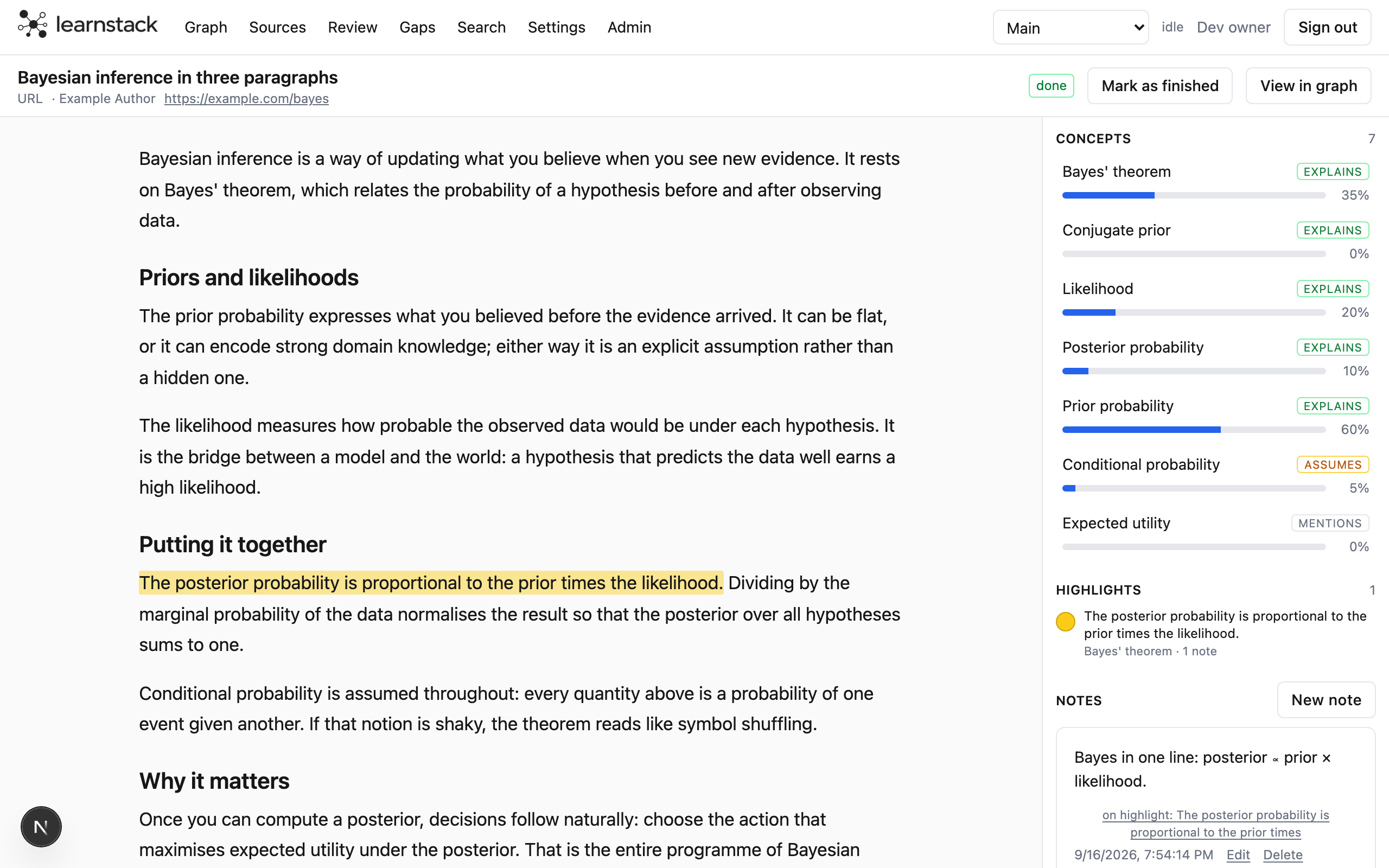
Read, highlight, keep the evidence
Articles and PDFs open in a plain reader. Highlight a passage and attach it to a concept, write a note, or turn it into a flashcard on the spot. The rail lists what this source covers and jumps to where each concept is explained.
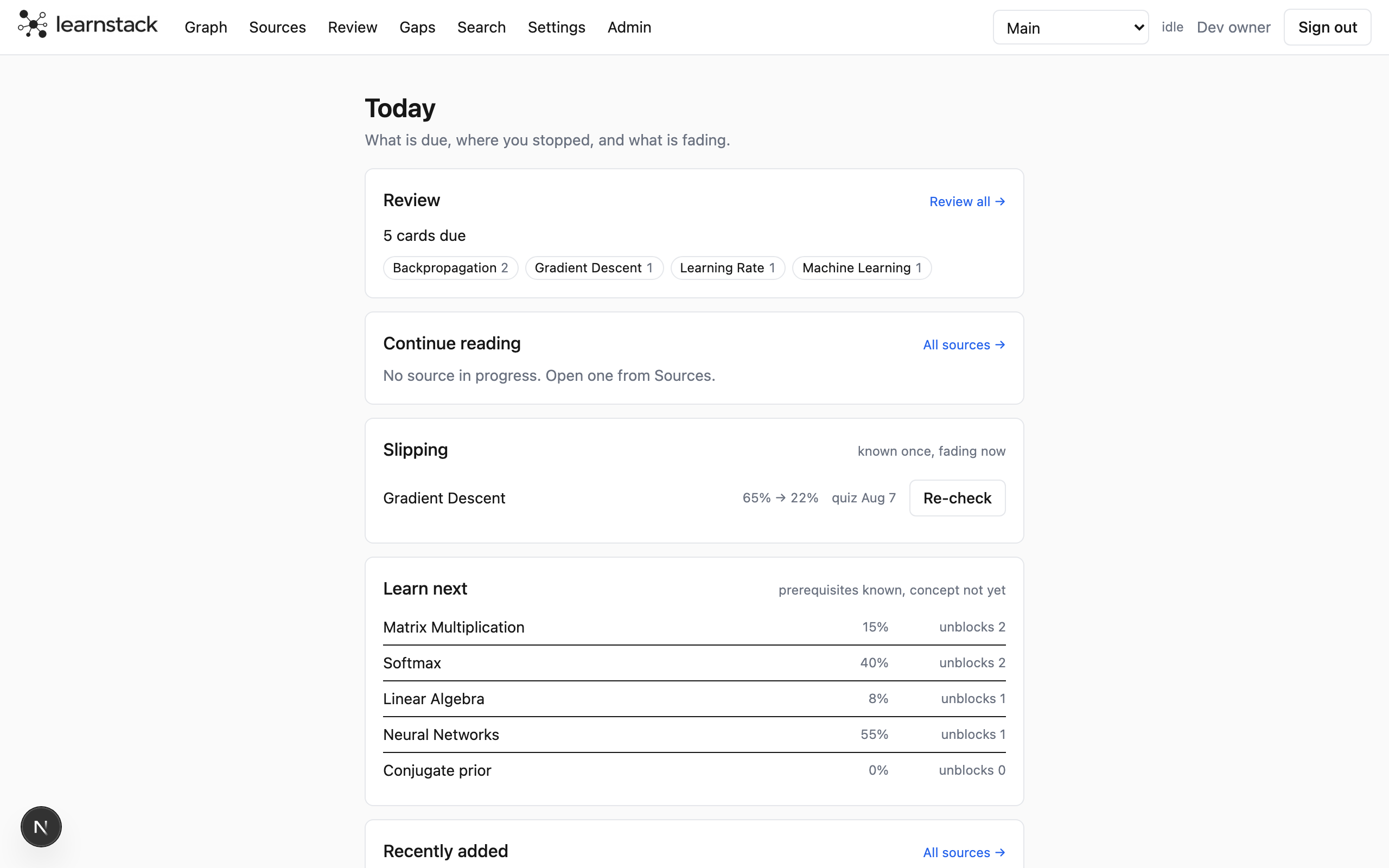
A feedback loop, planned ahead of time
Today shows what is due, where you stopped reading, which concepts are slipping, and what to learn next given what you already know. Mastery decays when you leave things alone, so the page tells you before you have forgotten.
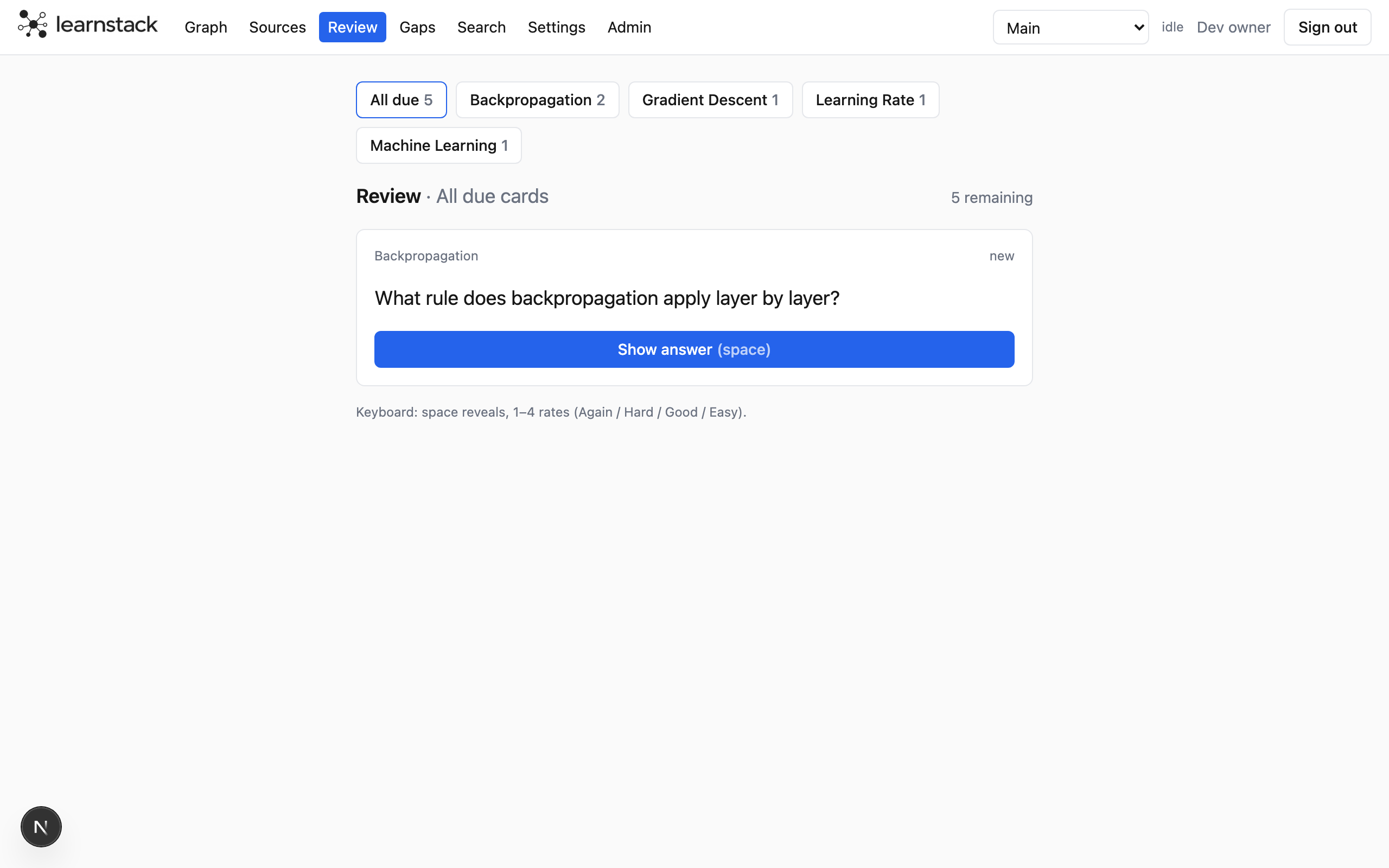
Cards and quizzes that come back at the right time
Cards are scheduled with FSRS and the page shows what each answer does to the interval. Quiz answers are graded, then you're given what was missing an ideal answer you can save as a card.
What is in the box
Sources of any size
URLs, PDFs, pasted text, or the page you are on via the browser extension. A book becomes an outline; you pick the chapters worth extracting.
Evidence, not summaries
Every concept links back to the quotes that taught it. Nothing is stored that cannot be found in something you read.
Gaps
Concepts your sources assume but never explain are flagged. One click searches the web for something readable on the gap.
Mastery that fades
A score per concept from reviews, quizzes, self-ratings and coverage, rolled up the topic tree and decayed over time.
Learn next
The frontier of concepts whose prerequisites you already know, ranked by how much each one unblocks.
Notes with links
Markdown notes on any concept or highlight; [[double brackets]] link to concepts by name.
Graph editing
Merge, split, rename, reparent. A periodic sweep proposes merges and links across sources for you to accept or reject.
Yours to keep
Each graph is one SQLite file. Export the graph as JSON, cards to Anki, or the whole database.
Request an invite
learn-stack is invite-only for now. Tell me what you would use it for and I will send you an invite. Two minutes, no newsletter.